
Profitez des idées issues de notre travail
conceptuel, méthodologique et expérimental
C’est important, des solutions. Mais il y a un risque à s’y précipiter avant d’être sûr du problème.
Chez PHGD, nous partons des idées, nous appuyant sur des années d’expérience de la complexité, de la transdisciplinarité et de l’émergence. Nous savons que tout ne se définit pas comme « problème » et que la plupart des défis ne peuvent se traiter de manière segmentée.
L’essentiel, ce sont précisément les connexions.
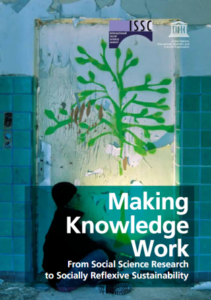
Rapport rédigé par John Crowley, publié en 2012 (disponible seulement en anglais).
Voir les connexions, cela suppose de se libérer des silos institutionnels et administratifs qui, le plus souvent, définissent l’espace de problématisation ; cela suppose aussi, le plus souvent là aussi, de donner de la visibilité à ce qui passe inaperçu.
Dans cette vidéo, enregistrée en avril 2021, John Crowley évoque certaines des choses que les habitudes de pensée et les institutions établies tendent à rendre invisibles, dont, notamment, le capital naturel et le capital humain. Dans nombre de cas, il existe des outils qui en permettent l’intégration. Pourtant, nos bilans – comptables comme métaphoriques, continuent de les négliger. Dès lors, sans surprise, nous sous-estimons l’importance de leur entretien.
Penser la transformation des systèmes énergétiques
Les systèmes énergétiques sont au cœur de tous les défis de durabilité auxquels le monde est actuellement confronté. Pourtant, ces systèmes restent relativement négligés par les sciences sociales et humaines – alors même qu’ils sont inséparablement définis par des infrastructures et des technologies, mais aussi par des institutions, des croyances et des comportements. L’exception est évidemment l’économie, qui en association avec l’ingénierie a forgé une image tellement évidente qu’on n’y pense pas : les enjeux de l’énergie réduits au financement des infrastructures qui lui permettent de circuler.
Cet aspect des systèmes énergétiques est certes important, mais il n’en épuise pas la compréhenion. Dans la vidéo, enregistrée pour un colloque en ligne en octobre 2020, John Crowley propose une réflexion sur la manière par laquelle des considérations philosophiques et anthropologiques peuvent enrichir la compréhension des systèmes énergétiques, et donc aussi de ce qui en serait la transformation.
Dans le domaine des transformations énergétiques, PHGD travaille tout particulièrement sur les systèmes électriques, notamment à travers le projet Flexeole. Notre vision de la décentralisation des systèmes électriques comme clé de leur transformation est présentée dans deux articles parus en anglais, fin 2025, dans la presse internationale :
Théoriser l'anthropocene
Energy systems are at the heart of every sustainability challenge the world currently faces, yet they remain comparatively neglected by the social and human sciences. The exception is of course economics, which in conjunction with engineering has shaped a taken-for-granted image of energy as a matter of funding infrastructure to allow it to flow.
This aspect of energy systems is important, but it is not the whole story. In the video, recorded for an online conference in October 2020, John Crowley discusses how philosophical and anthropological considerations can enrich understanding of energy systems, and thus also of what it would mean for them to be transformed.
Thinking about energy systems is one important aspect of the broader question of conceptualizing the Anthropocene, which underlies the whole dynamic from which the PHGD Group has emerged – with a particularly strong echo in the work of Hagrath.
The idea of the Anthropocene is orginally geological. It responds to the question how the distant future might identify the strata within which the traces of human activity at planetary scale might be found. But even in that form, it has a strong imaginary and narrative dimension, which points to the need to connect the humanities to the natural and social sciences in making sense of planetary impact, planetary solidarity and planetary responsibility while avoiding the excessively anthropocentric implications of much Anthropocene thinking.
In the video (available in French only), which was recorded in 2015 for the Environmental Humanities Portal, John Crowley offers reflections on the distinctive value of the environmental humanities in the face of planetary dynamics.
Connecting Gaming to Philanthropy
« Gaming for Good » has become big business, particularly in the field of e-sports. Schemes already exist to allow players to have fun while also giving some of what they win to causes they care about. Gaming platforms can also add to the philanthropic pot. And all of this is being further transformed by new forms of tokenization.

PHGD is working with a number of entrepreneurs to extend the concept of gaming for good to a wider range of games, including puzzles and quiz games, and to relate it to philanthropic advertising schemes. A key condition for this is to imagine innovative platforms, using blockchain technologies, to enable transparency, credibility and scalability of the connection between giving and investing.
Understanding Trust in Contemporary Societies
It’s become something of a cliché that contemporary societies suffer from a trust deficit. Public and private institutions – even science itself – are regarded with suspicion, with sometimes corrosive consequences. There’s certainly no way of designing and implementing a strategy for environmental transition without a minimum basis of trust in its knowledge base and in the institutions responsible for it.
But how does trust actually work? How, in particular, can the level of trust in a particular setting be assessed?
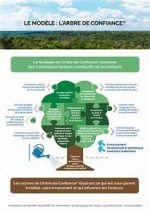
Working with PHGD partner TrustInside, we’re using the proprietary « Tree of Trust » model, developed by Pierre Winicki, to enrich trust concepts and methods and help institutions promote and cultivate trust.
One important area in which issues of trust are of crucial, even vital, significance is peace. However conflicts arise, they typically erode trust between individuals and communities. And conversely, lack of trust creates the conditions in which conflict potentials can be actualized.
In the video, recorded at a 2020 economics conference in Paris (content available in French only), John Crowley offers some ideas on what it would mean, as UNESCO’s Constitution puts it, to « build the defences of peace in the minds of men ».